

Photo by Lai Man Nung on Unsplash
I listened to her story as she described frightening experiences of real danger, as well as an underlying tension and anxiety she seemed to carry daily.
I could relate. I knew exactly what she was talking about, what she was feeling.
There’s a particular kind of awareness that comes with living abroad. Have you noticed? It’s subtle at first. We notice exits more quickly. We learn the rhythms of neighborhoods. We pay attention to tone, to body language, to what’s said or left unsaid. Over time, this awareness becomes part of how we move through the world.
At the center of that awareness is something both simple and profound: the need for safety.
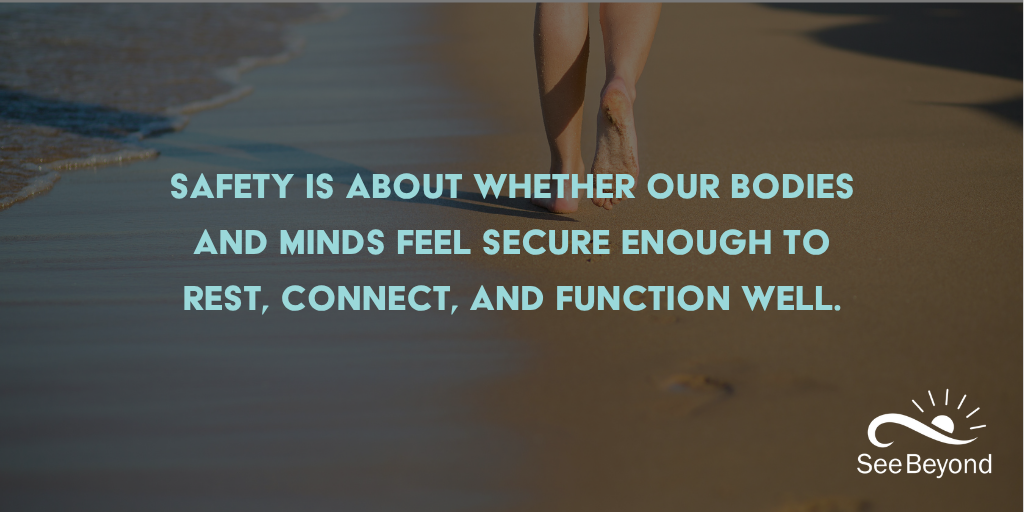
Safety is often misunderstood as simply the absence of danger. But in reality, it’s much more than that. Safety is not just about whether we are actually at risk. It’s also about whether our bodies and minds feel secure enough to rest, connect, and function well. It’s the difference between surviving and actually living.
For expats, safety takes on additional layers. We are navigating unfamiliar systems, languages, and cultural expectations. The cues that once told us “you’re okay here” may no longer apply. This can create a low-level tension that resides in the background of daily life.
I can remember when our family lived in Morocco for many years. When we traveled to Europe for vacation, we realized that we had been carrying an underlying anxiety and stress in our minds and bodies while in our host country. It’s not that we felt unsafe or in danger on a daily basis, but when we suddenly found ourselves in a more secure and relaxed environment, we could actually notice and feel the difference in ourselves and in our children.
What Safety Really Means
Understanding the value of safety begins with recognizing how foundational it is. When we feel safe, we think more clearly. We make better decisions. We’re more patient, more open, more creative. When we don’t feel safe—even if we can’t fully explain why—our world narrows. We become reactive. We withdraw or become hyper-vigilant.
When we don’t feel safe, we move and sometimes live outside of our Window of Tolerance. This represents the range in which we function well, where we feel calm enough to think clearly, but alert enough to respond to what’s around us. When our sense of safety is shaken, we can move outside of that window. For some, that looks like anxiety, restlessness, or constant alertness. For others, it can feel like shutting down, numbing out, or withdrawing.
Safety is not a luxury. It’s a prerequisite for everything else that matters, and we can see that it has both external and internal dimensions.
External safety includes the obvious: physical security, stable housing, access to healthcare. For expats, this might mean knowing which areas to avoid, having reliable transportation, or understanding local laws and customs.
But internal safety is just as important, and often overlooked. Internal safety is the sense that we can trust ourselves to respond to whatever happens. It’s knowing we can regulate our emotions, set boundaries, and make decisions that align with our well-being.
We can be in a relatively stable environment and still feel unsafe internally. And conversely, we can be in a challenging environment but feel grounded because we trust our ability to navigate it.
Both matter. And both require attention.
Honoring Our Own Need for Safety
One of the most difficult things—especially for capable, independent people—is admitting that we need safety in the first place. There’s often an unspoken pressure to be resilient and strong.
The woman who was telling me her story was living abroad and struggling with exactly this. There were certain situations where she felt afraid, but she was hesitant to admit it—even to herself. She believed that feeling unsafe meant she wasn’t strong enough, that it revealed some kind of weakness.
When we spoke about it, I told her something simple: the need for safety is universal. It’s not a flaw or a failure. It’s a fundamental human need.
The shift in her was immediate. There was relief in realizing she wasn’t alone, and that nothing was “wrong” with her for wanting to feel safe. From there, we could begin to look at what specifically helped her feel more grounded and what changes might support her in returning to that safe place more often.
We discussed how ignoring her need for safety didn’t make her stronger. It actually depleted her.
How Can We Honor Our Need for Safety?
It’s important to note that it’s not always people or situations on the “outside” that make us feel unsafe. Sometimes there is someone in our own community or household who is contributing to us feeling unsafe, perhaps making us feel shut down or silenced. Wherever the feelings are coming from, it’s important for us to intentionally pay attention to our need for safety.
Notice when your body feels tense, when your thoughts become scattered, when you feel unusually irritable or withdrawn. These are often signals that your sense of safety has been disrupted.
Ask yourself: What can help me feel grounded? Do I need a routine? Having consistent habits can create a sense of predictability. Is it connection—people you can speak to honestly, without having to explain everything? Is it physical practices like walking, breathing exercises, mindfulness, or simply being in a familiar space?
Set good boundaries. Living abroad can blur lines—socially, professionally, even emotionally. Being clear about what you are and aren’t comfortable with is not selfish, it’s healthy.
Give yourself permission to step back when needed. Not every situation requires endurance. Sometimes the most grounded choice is to pause, reassess, or even leave.
Community is one of the most reliable sources of safety. You can look for small, trusted circles, a few relationships where you can be fully present and not have to perform or explain yourself constantly.

Creating Safety for Others
Safety is not just something we seek for ourselves, it’s also something we can create for others.
Create a safe space in your relationships with others in the way you listen without judgment and respect boundaries.
In cross-cultural settings, safety involves cultural sensitivity by learning, adapting, respecting, and building trust with others.
In groups and communities, share information, look out for one another, and be mindful how your actions affect the larger community.
For those living far from what is familiar, just like the woman who shared her story with me, safety is even more important and meaningful. It’s what allows connection to deepen. It’s what supports not just our survival, but our growth.
And while we can’t control every external factor of safety, we have more influence than we often realize—both in how we care for ourselves and in how we contribute to the environments and communities around us.
Recognizing what your Window of Tolerance is and how it affects you is a great step toward honoring your need for safety. You can also check out this helpful article that includes practices and infographics to help you grow in your understanding and expand your window.