
The Truth About Conflict (It’s Not Difficult People)

We have all experienced it — at least, I think we have. If you haven’t experienced it, let me know. I want to know how you did it.
The messy middle of conflict.
Conflict is one of those words that conjures up all kinds of negative emotions and images for me.
What about you?
Even as I type the word, I am having a visceral experience. My mind flashes faces and names of people from my past. The muscles in my stomach, shoulders, and arms feel as tense as those relationships did. There’s a distant and deep throbbing in my temples and forehead. My heart beats fast as my brain recalls stories.
A flood of emotions sweeps through me—all of me—my mind, my heart, and deep, deep in my soul. If I were to pull out the Emotions Chart, I would be all over the map.
Anger, sadness, shock, disappointment... these words describe the pain and suffering that still linger, the nasty consequences of unresolved conflict.
There isn’t a part of my life that hasn't been touched: my family, my friendships, my marriage, my team, my neighborhood, my business, my church, my children’s school...
You name the place, I’ll tell a story . . . a story of conflict.
What is Going On?
Before we can figure out how to resolve conflict in our personal and work relationships, before we can determine if we need to call in outside help, there's something we need to know: most workplace and personal conflicts aren't caused by difficult people being deliberately obstinate or malicious.
Despite what we might assume when someone disagrees with our perfectly reasonable project proposal or our perfect plan for our next family vacation, conflict rarely stems from people waking up and deciding to make our lives miserable. The truth is that most disagreements arise from perfectly normal human limitations, miscommunications, competing priorities, unclear expectations, and the simple fact that different people see the same situation through vastly different lenses.
This matters because if we approach every conflict assuming the other person is being unreasonable or combative, we’ll miss the real problem and waste time fighting symptoms instead of causes. Understanding what actually creates conflict changes everything about how we handle it.

The Causes of Conflict
Miscommunication and Information Gaps
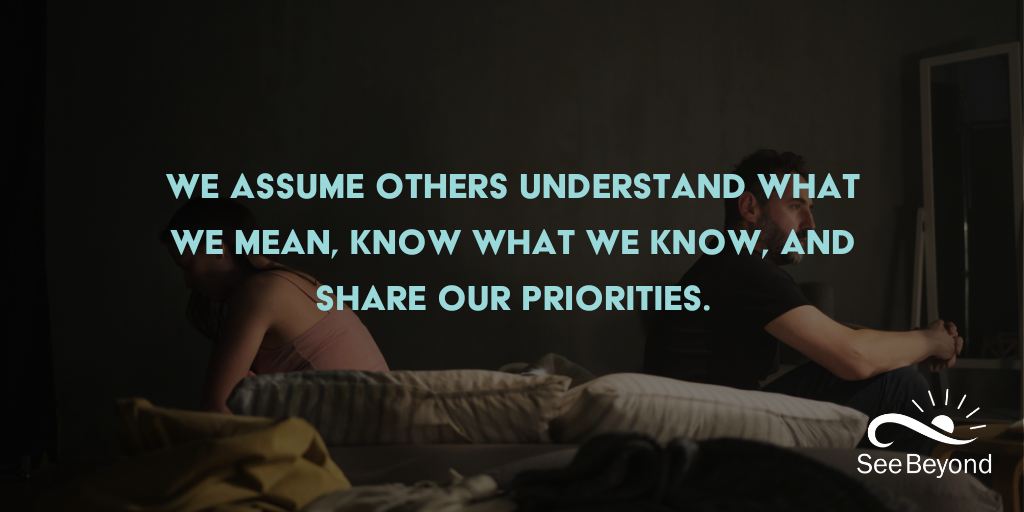
The single biggest cause of conflict is people working with different information or interpreting the same information differently. These gaps in communication can take place in the workplace or in the home. This happens more often than we might expect because we assume others understand what we mean, know what we know, and share our priorities. “Don’t they get it?”
Once we all realize that we are talking about completely different things, we can finally be on the same page and work towards finding a solution to the problem.
Ambiguous language creates similar problems. When someone says a project needs to be done “soon” or “properly” or “cost-effectively,” they’re using words that sound specific but mean different things to different people. These interpretation gaps don’t surface until deadlines approach and expectations clash. Sometimes we just need to ask, “What do you mean by ‘soon’ or ‘cost-effectively’?” Sometimes, we just need to clearly ask so that we can know what they understand and expect.
As many of us travel, live, and work in cross-cultural settings, this gap of communication and information can be intensified by language barriers, cross-cultural misunderstandings, and body language and gestures that might have different meanings in different contexts.
Competing Values and Beliefs
Some conflicts run deeper than miscommunication. When people hold fundamentally different beliefs about how work should be done, what “quality” means, or how decisions should be made, you're dealing with value conflicts that need different handling.
A software engineer who believes code should be precise and accurate will inevitably clash with a project manager who prioritizes speed to meet market demands. Neither person is wrong, they're simply applying different value systems to the same situation.
These conflicts often feel personal because our values feel like part of our identity. They run deep. When a value conflict triggers an identity crisis, it can hurt. (We dive deep into identity triggers in the Unwanted Feedback Workshop.)
Values and beliefs also vary from culture to culture, another important consideration for those of us living and working abroad. For example, the concept of personal body space differs greatly among North Americans who desire independence and their “own space” and North Africans who have a strong sense of being together in community.
Resource Competition
This cause of conflict more often takes place in the work environment. Limited budgets, tight deadlines, and competition for recognition create a scenario where one person’s gain feels like another’s loss. Collaboration can quickly evolve into competition, even when cooperation would produce better outcomes and relationships for everyone.
Role Ambiguity and Unclear Boundaries
Organizational charts and job descriptions rarely capture the messy reality of how work actually gets done. When responsibilities overlap or gaps exist between roles, people either duplicate efforts or assume someone else is handling critical tasks. Both scenarios create friction.
The worst role conflicts usually occur at organizational boundaries, between departments, between hierarchical levels, or between different types of expertise. This cause of conflict can also take place in the home with various parenting and household roles and tasks.
Personality and Communication Style Differences
While personality clashes are often blamed for conflict, they’re usually the least important factor. However, different communication styles can create unnecessary friction when people misinterpret how others prefer to receive and process information.
Someone who prefers detailed written documentation might view a colleague’s verbal updates as sloppy or unprepared. The colleague might see the request for documentation as bureaucratic micromanagement. Both people are trying to be professional; they just have different approaches to professionalism.
What Do We Do About This?
Now that we know some of the primary causes of conflict in the workplace and in our interpersonal relationships, what do we do about it? How do we fix our relationships? What are the stages of conflict management, and when do we need someone from the outside to help us figure it out?
Yes, it’s true, conflict is inevitable in life, in relationships. However, we don’t have to stay there. We don’t have to avoid, ignore, or remain forever in the messy middle of conflict. There is a way out, we just need to find it! Stay tuned for a road map for reconciliation and conflict mediation.
For more tips on handling your emotional triggers when in conflict, sign up for the Unwanted Feedback Workshop where you’ll learn to identify three common knee-jerk reactions to feedback plus four healthy responses to your triggers. Registration ends March 4.
